Which Industrial Hose Is Best for Harsh Outdoor Environments?
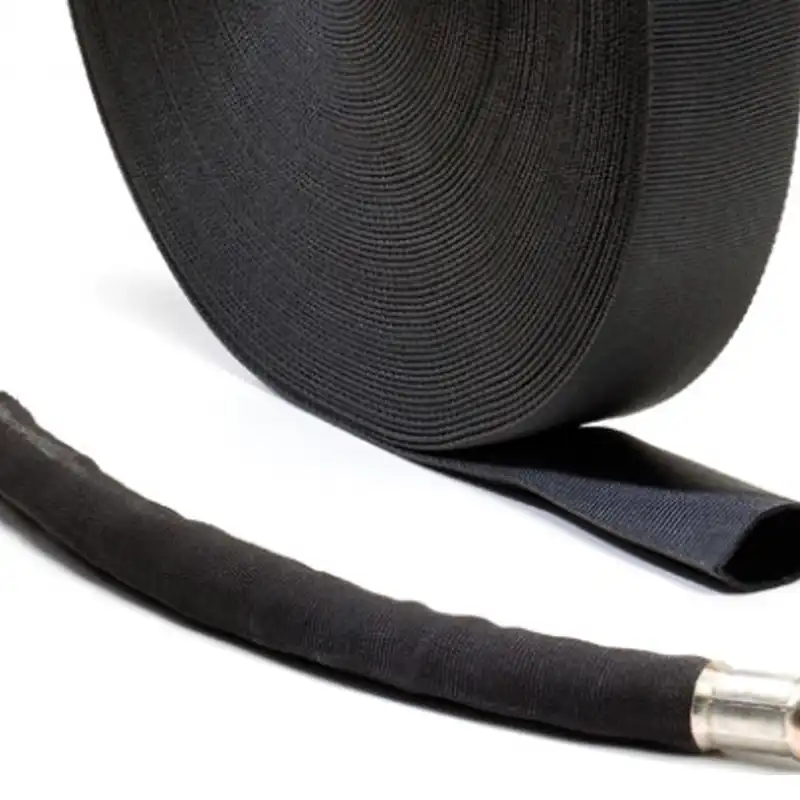
For harsh outdoor service, the best general-purpose choice is usually a reinforced hydraulic hose with an oil-compatible inner tube, steel-wire reinforcement, and an abrasion-, ozone-, and weather-resistant outer cover. ISO 18752:2025 covers hydraulic hose sizes from 5 to 102 mm and specifies oil-based fluid service from −40°C to +100°C for several hose types and up to +120°C for higher-temperature types. A suitable hose must also tolerate pressure impulses, repeated flexing, moisture, sunlight, and surface wear. Material alone is not enough; tube, reinforcement, cover, fittings, bend radius, pressure rating, and fluid compatibility must work as one assembly.
Outdoor hose failure usually starts with combined exposure rather than one isolated condition. A machine working at 35°C ambient temperature can place hoses beside engine, exhaust, or hydraulic components where local temperatures are much higher, while the same equipment may start at −20°C the following winter. ISO 18752:2025 therefore uses a −40°C lower temperature limit for multiple oil-service hose classes rather than assuming mild outdoor weather.
Temperature also changes how a hose handles movement. Rubber becomes less flexible as temperature falls, while long exposure near the upper temperature rating can accelerate changes in the tube and cover. A hose that bends easily at 20°C may place more stress on fittings during a −30°C morning start, so minimum ambient temperature should be considered together with fluid temperature rather than checked separately.
Pressure becomes the next selection point because outdoor equipment rarely operates at perfectly steady system pressure. Excavators, loaders, drilling rigs, forestry machines, agricultural equipment, and lifting systems repeatedly start, stop, reverse, and load actuators, creating pressure cycles throughout the hose life. One current high-pressure hose example has been tested to 1,000,000 impulse cycles while bent to 50% of the reference SAE 100R12 and EN 856 R12 bend radii.
That figure also shows why working pressure and burst pressure are different specifications. A Gates 1.25-inch high-temperature wire-braid hose, for example, lists 1,825 psi working pressure and 6,500 psi minimum burst pressure; using the burst figure as the normal operating limit would be incorrect. Pressure spikes, impulse frequency, operating temperature, fittings, and assembly quality all affect whether the published working-pressure rating can be used safely.
Once pressure is matched, reinforcement needs to fit the service pattern. Textile reinforcement can suit lower-pressure applications, while one- or two-wire braid is common where moderate-to-high hydraulic pressure and flexibility are required. Four- and six-spiral constructions are used for higher-pressure and high-impulse duty where repeated cycling places greater stress on the hose wall.
ISO 18752:2025 approaches hydraulic hose selection by performance class rather than relying only on older construction descriptions. The current edition specifies 10 pressure classes, 4 grades, and 7 hose types across nominal sizes from 5 to 102 mm. That structure is useful for outdoor machinery because two hoses with similar dimensions can have very different impulse life, bend performance, temperature capability, and cover durability.
Abrasion deserves equal attention because many outdoor hoses fail from external rubbing before pressure damages the tube. Hose-to-hose contact, frame edges, clamps, concrete, gravel, and metal guards can gradually remove the cover. Once steel reinforcement becomes exposed, water and road salt can reach the wire, while continued rubbing removes part of the structure designed to contain pressure.
Published abrasion data can vary greatly between cover compounds. Gates states that its MegaTuff cover lasts up to 300 times longer than the standard version in hose-to-hose and hose-to-metal abrasion testing performed to ISO 6945, while another enhanced cover in the same product family is rated up to 25 times longer than standard hose. Those figures should not be transferred to unrelated brands, but they show how large the performance gap between cover formulations can be.
A hose with the correct 3,000 psi rating can still have poor outdoor service life if its cover repeatedly rubs against a steel bracket. Routing clearance, clamps, sleeves, and bend geometry may matter as much as adding another reinforcement layer.
Bend radius follows directly from abrasion because poor routing often creates both rubbing and excessive bending. Forcing a hose into a tighter curve than its specified minimum radius can deform the reinforcement, flatten the tube, restrict flow, and concentrate stress near the coupling. On articulated equipment, the correct radius must be maintained throughout the full movement of the boom, arm, steering joint, or attachment.
Modern hose designs can reduce the space required for routing, but the improvement needs published validation. One ISO 18752-rated 28 MPa wire-braid hose is specified for a bend radius equal to 50% of EN 857 2SC and 40% of EN 853 2SN reference bend radii at rated working pressure, while retaining a 4:1 design factor. Compact machinery can benefit from that geometry when hose routing space is limited.
| Outdoor condition | Practical hose feature to check | Useful specification |
|---|---|---|
| Repeated sunlight and weather | UV-, ozone-, and weather-resistant cover | Outdoor exposure rating or manufacturer weathering data |
| Rubbing on steel or other hoses | Abrasion-resistant cover or sleeve | ISO 6945 abrasion data |
| Cold starts | Low-temperature flexibility | Rating at −30°C or −40°C |
| Hot hydraulic oil | Heat-resistant tube and cover | Continuous fluid-temperature rating |
| High impulse pressure | Wire braid or spiral reinforcement | SAE/ISO impulse qualification |
| Tight machine routing | Reduced minimum bend radius | Published radius by hose size |
| Rain, road spray, salt | Protected reinforcement and fittings | Corrosion-resistant fitting finish |
Fluid compatibility narrows the choice further. Nitrile-based tubes are widely used with petroleum hydraulic oils because nitrile offers useful oil resistance, while EPDM is commonly chosen for water, coolant, and many weather-exposed applications but is generally unsuitable for petroleum oils. PTFE can handle a much broader range of aggressive chemicals, although the surrounding braid, cover, fitting material, and temperature rating still determine whether the complete assembly suits outdoor machinery.
The ISO 18752:2025 limits illustrate why the conveyed medium cannot be ignored. Oil-based HH, HL, HM, HR, and HV hydraulic fluids are covered from −40°C to +100°C for AS, AC, BS, and BC hose types and up to +120°C for CS, CC, and DC types, while specified water-based fluids are limited to +70°C and water service runs from 0°C to +70°C.
That difference becomes important when one machine uses petroleum oil and another uses a biodegradable hydraulic fluid. Some current reinforced hoses are qualified for petroleum fluids as well as synthetic esters, polyglycols, and vegetable-oil-based fluids, but compatibility should be confirmed for the exact fluid formulation. Additives, concentration, contamination, and operating temperature can change compatibility even when the base fluid family appears suitable.
For buyers comparing Kingdaflex hydraulic hoses with other industrial hose options, the useful comparison is not brand name versus brand name but the published specification for the exact hose series. Check working pressure by inside diameter, minimum burst pressure, reinforcement type, temperature range, minimum bend radius, tube compound, cover compound, compatible fluids, fitting system, and the standards claimed for that particular product.
A hose marked “weather resistant” still needs measurable limits. If an application can reach 4,000 psi, −35°C during startup, and 95°C fluid temperature, those three figures should appear in the specification review before price or outside diameter is considered. A hose rated for 100°C oil may fit that thermal range, while a product limited to 80°C should not be treated as equivalent simply because both use a rubber cover.
-
Record normal pressure and the highest expected pressure spike; do not select from average pressure alone.
-
Measure minimum and maximum ambient and fluid temperature; a 2025 ISO rating can provide a reference, but the hose maker's current data sheet governs the selected product.
-
Identify the exact fluid, including biodegradable oil, water glycol, coolant, fuel, or chemical mixture.
-
Measure the smallest installed bend radius at every machine position.
-
Check whether the hose contacts metal, another hose, ground surfaces, or moving guards.
-
Match couplings and crimp specifications to the hose series rather than combining components only because the nominal diameter is the same.
Fittings need the same attention because the assembly is limited by its least suitable component. Outdoor fittings face rain, wash water, humidity, fertilizers, road salt, offshore spray, and industrial chemicals. Carbon-steel fittings with suitable corrosion protection may work in many mobile applications, while stainless steel can be appropriate where corrosion exposure is more severe; material choice still has to match pressure and fluid requirements.
Assembly practice then affects how the published hose performance appears in service. Incorrect insertion depth, wrong crimp diameter, damaged skiving, contamination inside the tube, or a coupling from an unqualified system can reduce reliability even when the hose itself meets SAE or ISO requirements. ISO 18752:2025 explicitly covers hoses and hose assemblies but does not specify connection-end requirements, so fitting qualification must be checked separately.
Inspection intervals should reflect operating severity rather than a fixed calendar assumption. A stationary water hose exposed to sunlight sees a different wear pattern from a hydraulic hose on a loader that flexes several thousand times per shift. Inspect cover abrasion, cracks, exposed reinforcement, local flattening, leaks, coupling movement, corrosion, and sharp bends; any hose showing reinforcement exposure or coupling displacement should be removed according to the equipment maker's maintenance procedure.
Replacement cost also needs to include downtime. A less expensive hose replaced twice as often may cost more once machine access, cleaning, labor, lost operating hours, and hydraulic-fluid replacement are counted. When one premium abrasion cover is documented at up to 300 times the abrasion resistance of its own standard cover under ISO 6945 testing, paying only for nominal pressure rating can overlook a measurable part of outdoor service performance.
For construction, mining, forestry, mobile hydraulics, and exposed industrial machinery, reinforced synthetic-rubber hose with a nitrile-compatible tube, wire reinforcement, and a weather- and abrasion-resistant cover is often the most practical starting specification. Applications dominated by water, chemicals, very high temperatures, low weight, or unusually tight routing may favor EPDM, PTFE, silicone, polyurethane-covered thermoplastic hose, or another specialized construction instead.
The final selection should therefore be made from documented numbers: pressure in bar or psi, fluid and ambient temperature in °C or °F, inside diameter, bend radius in millimeters, impulse qualification, abrasion test method, fluid compatibility, and fitting approval. A hose rated from −40°C to +120°C and qualified for the required pressure cycle provides far more useful information than a label such as “heavy-duty outdoor hose.”