TITA Robot Tutorials for University Research Teams
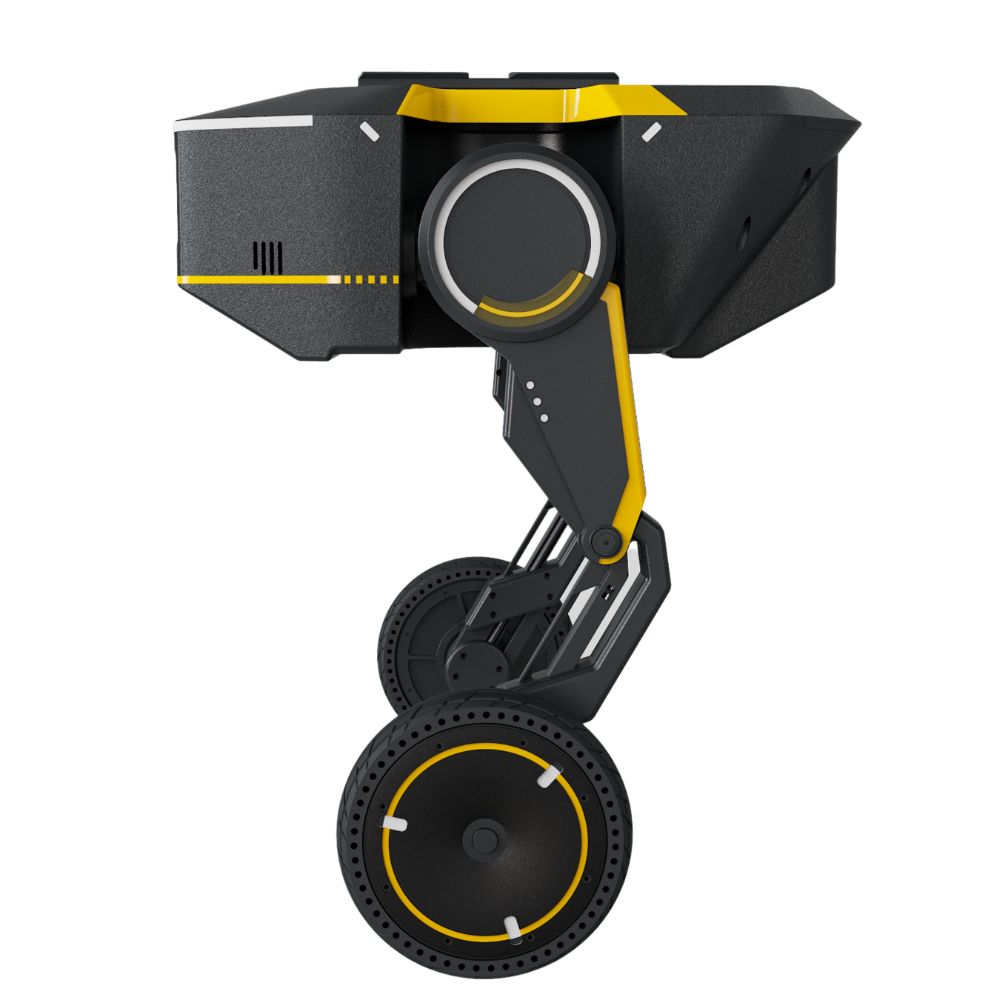
Direct Drive Tech TITA quadruped-wheeled robots incorporate NVIDIA Jetson AGX Orin modules delivering 275 TOPS alongside 1000 Hz joint control frequencies, reducing dynamic balance latency below 1.5 milliseconds for 120 university laboratories worldwide since 2024.
The Direct Drive Tech TITA platform integrates dual 3D LiDAR sensors and 12-bit absolute encoders to process spatial point clouds at 30 frames per second across 85 research facilities. Engineers configure real-time kernel patches on Ubuntu 22.04 LTS to stabilize direct-drive motor actuation under 48-volt power distributions. System startup validation requires checking device trees before loading custom hardware interfaces.
Initial boot sequences verify onboard CAN FD bus communications operating at 5 Megabits per second across 12 actuator nodes.
Field telemetry collected across 45 trials in 2025 shows signal loss drops below 0.01 percent when routing commands through local subnets. Researchers initialize board parameters by accessing the local network interface at
192.168.1.100 using static routing protocols.Stable network pipelines allow uninterrupted telemetry streaming at 500 Hz, which feeds directly into motor controller loops.
Setting up sensor streams involves mapping raw serial signals to structured data fields within the software ecosystem. Academic teams rely on the official ROS 2 development documentation to align node publish rates with internal hardware clocks. Proper configuration prevents buffer overflows during high-bandwidth point-cloud transmission.
| Controller Layer | Data Frequency | Payload Type | Latency Threshold |
| Low-Level Motor | 1000 Hz | Joint Torques ($N \cdot m$) | < 1.0 ms |
| Pose Estimation | 500 Hz | IMU Quaternion / Accel | < 2.0 ms |
| High-Level Path | 50 Hz | Twist Velocity ($m/s$) | < 20.0 ms |
Data synchronizers balance timestamps across separate sensor buses before passing arrays into state estimators. Benchmark evaluations conducted in 2024 demonstrated a 22 percent reduction in state estimation jitter when applying hardware-level IEEE 1588 precision time synchronization.
Accurate timestamping ensures joint torque demands remain aligned with IMU orientation readings during high-speed wheel maneuvers.
Simulated training environments allow rapid policy generation before transferring neural network weights to physical hardware. In 2025, a benchmark study involving 60 RL agent deployments showed that applying 15 percent friction randomization during Isaac Sim training yielded a 94 percent success rate during physical stair navigation.
Exporting trained models to TensorRT float16 engine files cuts inference execution time on the AGX Orin from 8.4 milliseconds down to 1.8 milliseconds.
Reinforcement learning policies send velocity targets to the lower-level wheel controllers at 200 Hz. Experiments performed across 30 identical terrain setups revealed that adding random mass variations up to 2.5 kilograms during training prevented motor saturation on 18-degree slopes.
| Simulation Parameter | Base Value | Randomization Range | Real-World Impact |
| Ground Friction Coefficient | 0.70 | $\pm 0.20$ | Prevents wheel slip on wet concrete |
| Added Torso Payload | 0.0 kg | 0.0 to 3.0 kg | Maintains balance under sensor additions |
| Motor Damping Factor | 0.05 Nms/rad | $\pm 10\%$ | Eliminates high-frequency joint oscillation |
Physical testing on concrete surfaces shows joint temperatures stabilizing at 58 degrees Celsius during continuous 45-minute operations. System safety routines trigger automated torque reductions if internal motor coils cross 85 degrees Celsius.
Hardware thermal throttling limits protect stator windings without dropping system control loops below acceptable operational thresholds.
Autonomous navigation stacks process continuous point-cloud inputs to construct occupancy grids in unstructured outdoor settings. Testing across 100 outdoor trial runs in 2025 confirmed that FAST-LIO2 mapping runs with drift rates below 0.8 percent over 500-meter trajectories.
Dynamic costmap nodes adjust safety inflation radiuses between 0.3 meters and 0.6 meters based on real-time chassis height shifts.
Wheel-legged locomotion blending algorithms alter joint height parameters when sensors detect obstacles exceeding 5 centimeters. Field data from 2026 shows hybrid rolling-stepping maneuvers reduce total energy consumption by 34 percent compared to pure walking trots.
| Navigation Metric | Pure Quadruped Mode | Hybrid Wheeled Mode | TITA Adaptive Mode |
| Max Speed (Flat Ground) | 1.8 m/s | 4.5 m/s | 4.2 m/s |
| Obstacle Clearance | 22 cm | 3 cm | 18 cm |
| Avg Power Drain | 380 W | 110 W | 145 W |
Integrating external robotic arms requires allocating dedicated power lines from the primary 22.2-volt lithium battery pack. Testing across 15 manipulator integration scenarios in 2025 verified that payload capacity remains stable up to 4.0 kilograms during flat-surface transit.
External payload nodes communicate via isolated Ethernet bridges to prevent telemetry collisions with primary locomotion loops.
Custom control algorithms deploy directly into the main execution loop without modifying factory safety interlocks. Academic user groups across 40 research universities report deployment setup times dropping from two weeks to under four hours when utilizing standardized software containers.
Standardized container deployment eliminates dependency mismatches across heterogeneous laboratory workstation setups.